Building Safety Into the Future: Why Blast-Resistant Modules Matter
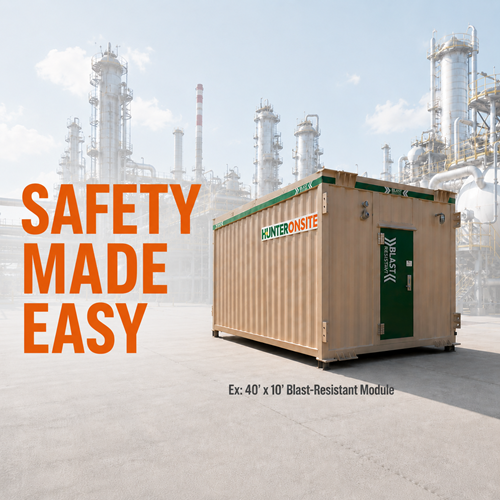
In high-risk industries, safety is more than a requirement on paper—it directly impacts people, operations, schedules, and business continuity. Across industrial facilities, disaster-prone regions, and conflict-sensitive environments, companies are investing in infrastructure designed to protect personnel and maintain operational control when conditions become dangerous.
Blast-resistant modules (BRMs) have become a crucial component of this strategy. Engineered to withstand explosive forces and overpressure events, these structures provide protected workspaces for personnel operating near hazardous processes and high-risk areas.
Moving Beyond Reactive Safety Measures
As industrial operations continue to grow in size and complexity, the potential consequences of an explosion, pressure event, or external threat have become more significant. Companies no longer rely solely on procedures and PPE—they incorporate engineered protection directly into the jobsite.
Blast-resistant modules are designed to help reduce injuries, protect critical personnel, and limit damage during serious incidents. More importantly, they give teams a protected space to continue managing operations during high-pressure situations.
Several factors continue to drive demand for BRMs:
- Increased exposure to hazardous processes in the energy, petrochemical, and manufacturing sectors
- Stricter safety expectations and regulatory requirements
- Rising financial impacts tied to downtime and operational disruption
- Greater focus on workforce protection and risk reduction
For many organizations, blast protection is no longer viewed as optional infrastructure. It is part of responsible operational planning.
Fast Deployment Where Protection Is Needed Most
In emergency situations, turnarounds, shutdowns, and temporary projects, time matters. Traditional construction often cannot meet the speed required to safely support field operations.
Blast-resistant modules provide a practical solution by delivering rapidly deployable protected spaces that can be positioned close to active work areas.
Key advantages include:
- Fast delivery and installation at operating facilities
- Flexible layouts that adapt to changing site needs
- Minimal disruption during mobilization
- Safer access to operations in higher-risk zones
By placing protected offices, control rooms, break areas, or command centers closer to the work, companies can reduce unnecessary exposure, improve communication, and keep critical personnel protected throughout the project.
Protection Beyond the Industrial Jobsite
While BRMs are widely used throughout industrial facilities, their applications continue to expand into emergency response, disaster recovery, and defense-related operations. Common uses include:
- Refinery turnarounds and maintenance events
- Emergency response and disaster recovery operations
- Military and defense support environments
- Critical infrastructure protection
- Temporary control centers in unstable or high-threat locations
In these environments, blast-resistant structures provide more than shelter. They create secure operational spaces where teams can communicate, monitor conditions, and coordinate response efforts during critical events.
Built for Safety and Daily Performance
Modern BRMs are designed to do more than withstand blast pressure. They are built to support people working long hours in demanding environments while maintaining a high level of safety and functionality.
Depending on project requirements, modules may include:
- Reinforced structural systems designed to absorb blast energy
- Anchoring systems that improve stability during high-force events
- Fire suppression and gas detection systems
- Climate-controlled and insulated interiors for harsh environments
The goal is simple: provide a safer, dependable workspace without sacrificing operational efficiency or comfort for the personnel inside.
Supporting Operational Continuity During Critical Events
During an incident, maintaining command, communication, and oversight can significantly reduce operational downtime and improve emergency response efforts. Protected environments allow organizations to:
- Maintain operational control and communication.
- Protect essential personnel and decision-makers.
- Continue monitoring critical processes.
- Coordinate emergency response activities in real time.
Whether responding to an industrial event, severe weather, or an unstable operating environment, having protected workspaces available can make a major difference in how effectively teams respond.
Flexible Rental Solutions for Changing Operations
Many industrial projects are temporary, fast-moving, or constantly evolving. Rental BRMs give organizations access to engineered, blast-tested structures without the long lead times or capital investment associated with permanent construction. Rental solutions provide:
- Rapid access to blast-resistant workspaces
- Scalable protection as projects expand or shift
- Reduced logistical and financial burden
- Faster mobilization for urgent deployments
This flexibility is especially valuable during shutdowns, emergency response efforts, and temporary high-risk operations where conditions can change quickly.
Safety That Protects People and Operations
Blast-resistant modules represent more than compliance. They are an investment in workforce safety, operational resilience, and the ability to maintain control during challenging conditions.
As industries continue to face evolving risks, companies are placing greater emphasis on protecting both personnel and critical operations. Blast-resistant modular buildings help meet that need by delivering dependable protection where and when it matters most.
Request a BRM quote request from the #1 name in safety—Hunter Onsite.